









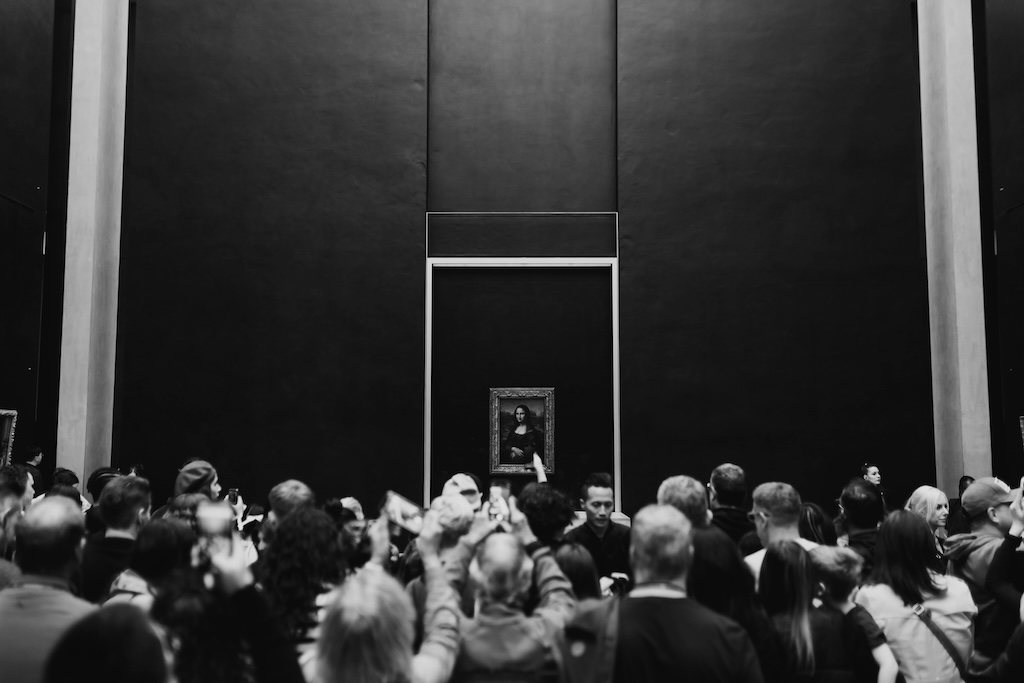
Every spring and fall, the world’s financial elite converge on New York and London for what has become a high-stakes ritual: the major auction house sales at Christie’s, Sotheby’s, and Phillips. The numbers that emerge from these rooms — $195 million for a Basquiat, $450 million for a da Vinci — generate breathless headlines. But beneath the theater lies a market that is, by the standards of modern finance, strikingly primitive: thinly traded, structurally opaque, and governed by conventions that would be illegal in virtually any regulated securities market.
Understanding how the fine art market actually functions — not how it is romanticized, but how it operates as a commercial system — is essential for anyone looking to participate in it intelligently, whether as a collector, an investor, or simply an informed observer of global capital flows.
The Scale of the Market — and Its Limits
The global art market generates between $60 and $70 billion in annual sales, according to the Art Basel and UBS Global Art Market Report, which has become the most widely cited benchmark for the industry. That figure places art comfortably among the world’s significant alternative asset classes — larger than the global wine investment market, comparable in size to certain segments of commercial real estate.
But raw volume figures are misleading. Unlike equities or fixed-income instruments, art is not fungible. No two works are identical. A share of Apple Inc. is indistinguishable from any other share of Apple Inc.; a painting by Mark Rothko is a unique, irreplicable object whose value is determined by a convergence of provenance, condition, critical reputation, art-historical significance, and the particular tastes of the buyers who happen to be in the room on a given evening.
This illiquidity is the market’s defining structural feature. The average time to sell a work of art at auction — from consignment agreement to hammer fall to settlement — spans four to six months. Secondary market sales through galleries can take years. There is no bid-ask spread that refreshes in milliseconds. There is no centralized exchange. There is no mandatory price disclosure in private gallery sales. The result is a market in which information asymmetry is not an anomaly but a foundational characteristic.
“The art market is one of the last great unregulated financial markets. That is simultaneously its greatest attraction and its most serious vulnerability.”
The Auction House Duopoly — and How the Economics Actually Work
Christie’s and Sotheby’s together command roughly 80 to 85 percent of the high-end auction market by value, a duopolistic concentration that has persisted for decades and shows no signs of structural change. Their business model is built on a commission structure that is more complex than it appears from the outside.
The standard public-facing metric is the “hammer price” — the price at which the auctioneer’s gavel falls. But the actual price paid by the buyer, and the actual proceeds received by the seller, both differ substantially from this figure. Buyers pay the hammer price plus a buyer’s premium, which is assessed on a sliding scale. As of the most recent published schedules, this premium typically runs 26 percent on the first $600,000 of the hammer price, declining in tiers to around 13.5 percent on amounts above $6 million. On a $10 million painting, this means the total buyer’s outlay is approximately $11.5 million — a not-insignificant gap from the reported sale figure.
On the seller’s side, the commission structure is far more variable and is individually negotiated for significant consignments. For works expected to fetch above a certain threshold — typically $1 million or more — auction houses frequently waive their seller’s commission entirely in order to secure the consignment. In competitive situations between Christie’s and Sotheby’s, sellers may also negotiate “guaranteed minimums” — a contractual floor price underwritten by the auction house or by third-party guarantors (often undisclosed collectors or financial entities who receive a portion of any overage as compensation for their risk). The practical effect is that the most commercially desirable works in any given sale carry dramatically different economic structures than the rest of the lot, a fact that is not transparent in reported sale results.
Price Discovery Without Price Transparency
One of the most counterintuitive aspects of the art market is that its most active segment — private gallery sales — operates with essentially no price transparency whatsoever. Galleries are under no legal obligation to disclose what they paid an artist for a work, what they sold it for, or to whom. In this respect, the primary art market resembles a private placement market more than a public exchange.
This opacity creates chronic challenges for price discovery. When a collector purchases a work through a gallery and subsequently seeks to resell it — whether through auction or through another dealer — the lack of historical transaction data makes establishing fair market value genuinely difficult. Auction house specialists, appraisers, and art advisors rely on a combination of published auction records (which represent only the minority of all art transactions), knowledge of comparable sales, and a significant degree of subjective judgment. The result is that the same work can carry a range of plausible valuations that would be astonishing in any other asset class.
Academic researchers have attempted to construct art price indices — among the most rigorous being those produced by Mei Moses (now owned by Sotheby’s), Artnet, and various academic teams — but these indices face fundamental methodological challenges. Repeat-sale methodologies, which track the same work across multiple auction appearances, are theoretically sound but limited by small sample sizes. Hedonic regression models attempt to control for quality differences but require assumptions about what drives value that are themselves contested. The honest conclusion from this body of research is that art’s risk-return profile, while potentially attractive over very long horizons, carries uncertainty bands far wider than those of conventional asset classes.
The Role of the Dealer Network
Alongside the auction ecosystem sits the gallery and dealer network, which accounts for the majority of art market transaction volume by deal count (though a smaller share by total value). The structure of this network is hierarchical and largely self-regulating.
At the apex are a small number of globally dominant “mega-galleries” — Gagosian, Hauser & Wirth, Pace, David Zwirner — that function less like traditional art dealers and more like vertically integrated cultural-financial enterprises. These entities manage the careers of the most commercially significant living artists, operate in multiple cities across multiple continents, control secondary market supply for their represented artists by selectively placing works with preferred collectors, and exercise substantial influence over the critical and institutional narratives that drive long-term value.
The relationship between a major gallery and a major artist is structurally analogous to a management contract in the entertainment industry. The gallery typically takes 50 percent of primary market sales, provides studio support, covers exhibition costs, and in many cases offers advances against future sales. In return, it controls distribution and exercises approval rights over where work is sold and to whom — a form of channel management that has no parallel in conventional securities markets but is entirely routine in the art world.
Below the mega-galleries, a vast ecosystem of mid-tier and emerging galleries operates with far thinner margins and considerably less market power. This segment of the market is economically precarious: the Art Dealers Association of America and comparable European organizations regularly report that the majority of commercial galleries operate on margins below 10 percent, with many running at a loss that is subsidized by the personal wealth of their proprietors.
Art as a Financial Instrument: The Investment Case Examined
The question of whether art is a sound financial investment is one of the most persistently debated topics in alternative assets. The bull case rests on several empirical observations: over multi-decade horizons, top-tier works by canonical artists have delivered real returns that compare favorably with broad equity indices; art has historically shown low correlation with financial markets (though this correlation increased notably during the 2008 financial crisis and the 2020 market dislocation); and physical art, like real estate and certain commodities, carries a non-financial “use value” in the form of aesthetic enjoyment that conventional financial assets do not offer.
The bear case is equally well-supported. The illiquidity premium — the additional return required to compensate for an asset’s difficulty of sale — is substantial and frequently underestimated by collectors who anchor on auction records while ignoring the many works that fail to sell (“buy-ins,” in auction parlance, which typically run between 30 and 40 percent of lots offered in any given sale). Storage, insurance, and conservation costs, which can run 1 to 2 percent of assessed value annually, constitute a significant drag on returns. And survivorship bias is severe: the returns reported by price indices reflect works that were sold, not the far larger universe of works that have become unsaleable.
“Art’s risk-return profile, while potentially attractive over very long horizons, carries uncertainty bands far wider than those of conventional asset classes.”
The emergence of art finance as a formal discipline has introduced partial solutions to the liquidity problem. A number of specialist lenders — among them Athena Art Finance (acquired by Yieldstreet), Sotheby’s Financial Services, and several private banks including Citi Private Bank and UBS — now offer loans against art as collateral, with loan-to-value ratios that typically range from 40 to 50 percent for established works. These facilities allow collectors to monetize the value of their holdings without triggering a sale event. The market for art-secured lending is estimated to have reached $30 billion or more in outstanding balances, though precise figures are, characteristically, difficult to verify.
Regulatory Arbitrage and the Compliance Frontier
The art market’s opacity has historically made it attractive not only to collectors but also to those seeking to move capital across borders outside conventional financial channels. Money laundering through art — the practice of using art purchases to convert illicit cash into legitimate assets — has been documented in numerous prosecutorial cases and governmental inquiries over the past two decades.
Regulatory response has been slow but accelerating. In the United States, the Anti-Money Laundering Act of 2020 brought high-value art dealers under Bank Secrecy Act obligations for the first time, requiring them to implement know-your-customer procedures and report suspicious transactions above certain thresholds. The European Union’s Fifth Anti-Money Laundering Directive similarly extended AML requirements to the European art trade beginning in 2020. The UK’s Money Laundering Regulations were updated in the same period with comparable effect.
These regulatory changes represent a meaningful structural shift for an industry that has operated outside the financial compliance framework for its entire modern history. Implementation has been uneven — the compliance infrastructure of major auction houses and mega-galleries is considerably more developed than that of the thousands of small dealers who collectively make up the majority of market participants — but the direction of travel is clear. The art market is, gradually and sometimes reluctantly, being brought into alignment with the regulatory standards that govern other markets for high-value assets.
What Sophistication Looks Like in This Market
For investors, collectors, and institutions approaching the fine art market, the analytical framework most likely to produce sound decisions is one borrowed not from the art world but from private equity and alternative assets. That means thinking rigorously about liquidity horizons — a minimum of five to ten years for any serious commitment — scrutinizing total cost of ownership including carrying costs and transaction friction, maintaining realistic expectations about the size and reliability of the eventual buyer universe, and treating provenance and condition documentation with the same diligence applied to due diligence in any other alternative asset transaction.
It also means recognizing the limits of publicly available data. Auction records, the closest thing the art market has to a public price feed, capture a minority of actual transactions and are subject to the selection biases that characterize any voluntary reporting system. The works that appear at auction are, by definition, works that consignors believe the auction environment can price advantageously. The works that sell privately — through dealers, through direct collector-to-collector transactions, through estate sales — never enter the public record at all.
The fine art market will not become fully transparent, fully liquid, or fully regulated in any near-term timeframe. Its opacity is not merely a regulatory failure; it is a structural feature that many participants actively value, for reasons that range from the entirely legitimate (privacy, discretion, the protection of family collections from unwanted solicitation) to the considerably less so. Understanding that opacity — not wishfully editing it out of one’s analysis — is the starting point for any serious engagement with one of the world’s oldest, strangest, and most persistently fascinating markets.